...for no specific reason or purpose.
Once my cousin told me that she had done an art project on “angles, perspective” and children. I thought at the time yet again something that us, non-artists, cannot comprehend! In everyday English her project can be said that it aimed at drawing objects, as a child of no more than 1,20 m tall sees them. And indeed her work was very interesting as it revealed quite angles of door knobs, tables and chairs that we, the tall people, never pay attention.
When I was 12 or 13, I don’t quite remember any more, I visited the Acropolis in Athens, Greece. As I was admiring the deeds of the ancient Greeks, I remember I noticed at one point a cat at the uppermost part of the Parthenon. Whilst the other kids that were in the group were contemplating whether the cat could make it back to the ground, my sight was still on the height of the columns and the grandeur of the ancient temple. As if I were not mesmerised and overtaken by awe already, I later found out that the Parthenon was actually colored in the ancient times, it is just that the paint has faded over the years.
Not so long ago I was in the Museum of Fine Arts in Antwerpen, Brussels, admiring the wonderful works of Rubens, Jordaens and Brueghel among other Belgian and European painters. At one point I saw a beautiful painting, and naturally I approached it in order to read the name of the artist. My attention was drawn to the fact that James Ensor, a famous Belgian expressionist/surrealist painter of the 19th century, painted that particular painting in his early 20s, as a matter of fact I think he was 21. Van Gogh, I happened to read somewhere later that day, died at the age of 37.
In their 40’s and 50’s people seem to demonstrate a unique affinity for art. People’s houses become embellished by paintings, or copies of famous works of art. People quench their thirst for art with visits to local and not-so-local museums to visit the masterpiece. It is at this age that people speak of da Vinci or Micheangelo as the fathers of art and western civilization.
Cezanne, the famous French impressionist and precursor to modernism, after a lifetime of struggle for perfection, wrote in 1906 at the age of 67 –just a month before his death– that he was barely noticing some “progress” in his artistic technique.
Not all things have to follow a scheme, a plan, a strategy or be dictated by a law, a rule or a regulation. Things coexist, at times harmoniously, at times not. Too often, we run after things, leaving little time to ourselves to enjoy or simply observe.
Friday, June 16, 2006
Art and age together...


Sunday, May 28, 2006
Remembering to remember
In a new introduction for his famous book "Night" Elie Wiesel, Auschwitz survivor and Nobel Peace Prize winner, reveals the motivation that prompted him to put into words the horror he experienced in the concentration camps: "I only know that without this testimony ['Night'], my life as a writer -or my life, period- would not have become what it is: that of a witness who believes he has a moral obligation to try to prevent the enemy from enjoying one last victory his crimes to be erased from human memory." (viii)
Having read the book I cannot but agree both with the gravity that Wiesel attributes to the experience in the concentration camps and the obligation he feels towards humanity to transmit the story of his family. The story that Wiesel describes in "Night" is a personal story at one level, as it describes the final days of Wiesel's father and family in the camp; at another level it can be said that it belongs to the collective memory of the jewish people and humanity more broadly. Going beyond the personal story of Wiesel, this citation highlights an important issue - remembering.
During ancient times, people did not have computers, videocameras and, in some cases, not even "paper". Yet historical events that occurred long ago have survived through myths, stories, poems, and most importantly, constitute part of our heritage. Today we can rely on our scientific methods and modern technologies to record the historical events for us- surely, when comparing our "history books" to those of our ancestors, we are better of.
However, recording history and ingraining it into one's culture are two distinct things: while the former implies diligence and acuracy in the process of "taking history down", the latter involves taking history into the heart and making it part of one's self.
With time "flying by" quickly and recent past sounding like distant times, with a multitude of events occurring concurrently at a global level, with such extremes as nationalistic interpretations or indifference leaving their own mark, how easy is to preserve "memory", not only in books but in the heart too, how easy is not to forget what really happened, not to grant "the last victory" to the enemy?
Sunday, May 07, 2006
Oh G(reed) I praise thy name...!
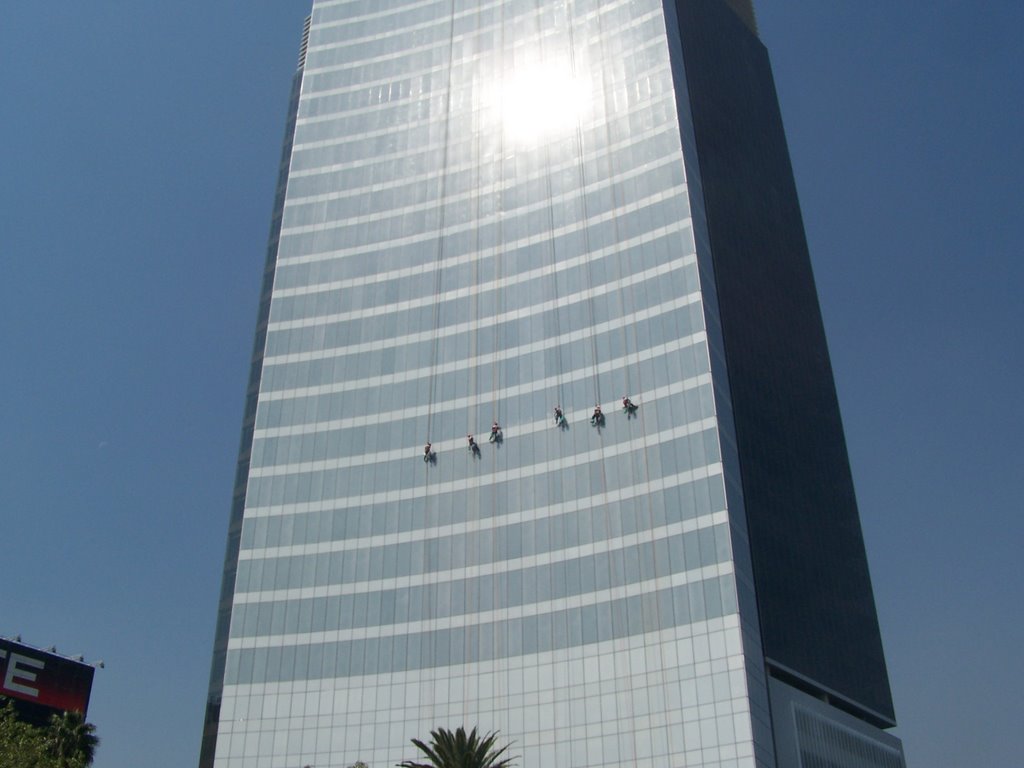
Long time now, I have been thinking to write about Greed. Why? you may ask. To me greed is one of the most defining characteristics of humans, and most importantly greatly responsible for unhappiness and misery. More often than not, an individual cannot possess all that he wants; yet unable to quest his thirst for what he desires, the greedy will continue on with his futile pursuits.
We see greed manifested in a wide range of human activities and behaviors: from politics to interpersonal relationships, greed is what often drives people to act in a way that others perceive as ‘absurd’. Quite often, though not always, greed is behind selfishness too- the latter is just the expression of greed. Greed and ‘the maximization of profit’? Oh, what a lovely relationship I see there…!
And before I proceed any further, I want to emphasize that I am not against economic productivity: It is just that this relationship can be potentially volatile, particularly if greedy men are in control. Of course, I am not implying that everyone is greedy; yet to mistakenly assume that money is not controlling the lives of many would create a great illusion. In what I consider a must-read book, “El mundo es ancho y ajeno” (The world is broad and alien), Ciro Alegría writes: “El más triste animal pasta soles” which literally translates: “The most unhappy animal of all grazes money”. Today, more than ever, money has acquired supreme importance in our lives, and the more industrialized is the country we live in, the greatest the role it plays.
Regardless of how you value this statement, one thing that strikes to most of us is that money, something that we invented to serve us - a commodity for transactions- has grown quite powerful, impacting the lives of many significantly, whether directly or indirectly. Money is one way of seeing greed: the willingness to accumulate more and more is based on the notion that it can be exchanged for good or services. Greed however can transcend beyond material goods; it can extend for example to power and beyod. For one thing, we need to recognize its might.
I let you with one of my favorite quotes from one of Wole Soyinka’s essays in “Climate of Fear”. Talking about power he comments: “power, as long as you are sufficiently ruthless, amoral and manipulative is within the grasp of even the mentally deficient”(57).
(In the photo a facet of modern Mexico. Aren't we really small?)
Monday, April 24, 2006
We live in a free world...but I want my jeans cheap!
Extensive reliance on a "slave population" for subsistence and economic prosperity has been probably the biggest criticism for such ancient ("great") civilizations as the one that blossomed in ancient Athens around the 5th century B.C. Slavery is bad we have been told because enslaved populations do not enjoy the same fundamental rights that the rest of the population considers as graned. Days, years, centuries (even millennia) have gone by: we have abolished slavery, we have formulated theories regarding "exploitation and equality" as well as "free markets" and more generally, we consider ourselves well in advance with respect to promoting equality. But, in reality, can we claim we have gone that far?
In a world where democracy is almost universally espoused, we speak rather frequently of "freedom", the antidote to slavery. Yet most of the times we choose to focus almost entirely on political freedom, whereby we embrace democracy and condemn non-democratic regimes. One in fact must concede the importance of political freedom and democracy given that it guarantees, in theory, a certain level of respect for other fundamental human rights for all people.
But let us pause for a moment. We the peoples that inhabit "the democratic lands" can we honestly claim to have attained freedom for everyone in our country? Yes, if we go by the Constitutions, all people are created free and equal. But what about real-life terms? When those responsible for cultivating our strawberries and tomatoes get infinitely small salaries, that are worth almost nothing compared with their needs, can we not talk of another type of slavery? When immigrants, minorities, indigenous people or other such groups are either discriminated against, can we be satisfied with our own level of freedom and equality?
But there is more into that. Everytime we enjoy a cup of coffee that is not labelled as "free-trade coffee" we contribute further to the enslavement of the men and the children that were involved in its production. For the sweatshops that produce our jeans and clothing to become "normal factories", that is to demonstrate what in economic terms we call "corporate responsibility" and in plain english "respect for their employees" change of the status-quo is of paramount importance. Certainly. When we, the fervent proponents of democracy and equality, decide not to tolerate such situations anymore we can protest and rest assured that our voices will be heard- because we live in a democracy and our opinions matter. But wait a moment. If we are a little individualistic (jeans can be very expensive!) can we still be good democrats?
Friday, April 14, 2006
Of progress and failure
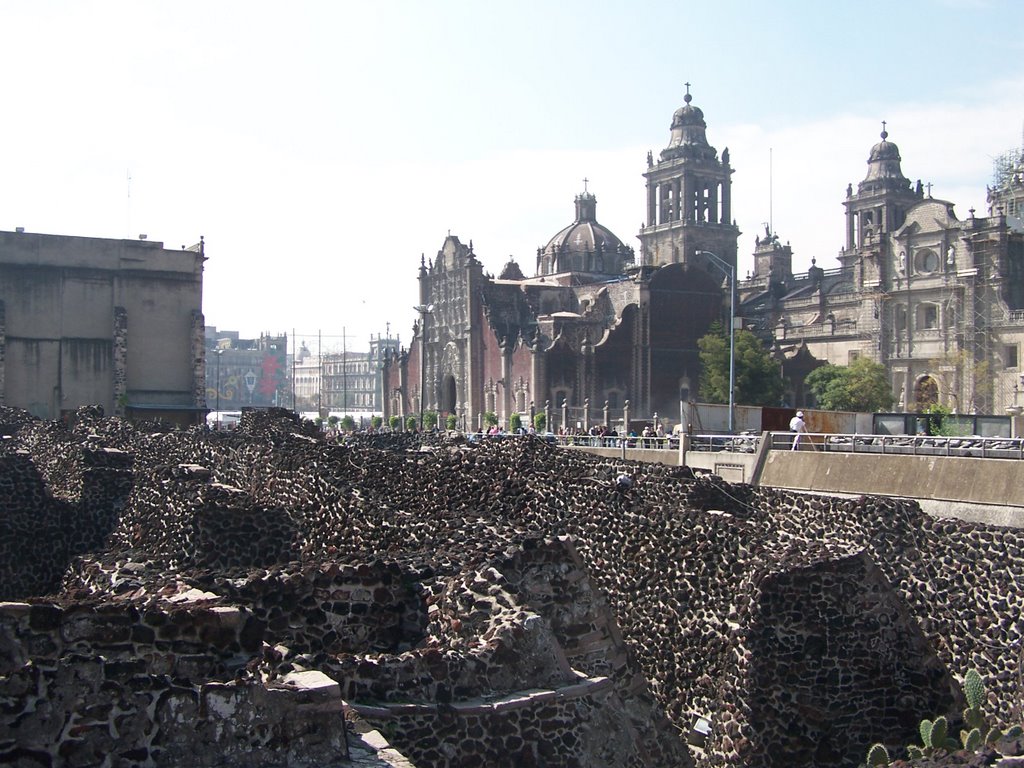
Humans are animals, or so many say. The instinct to survive and reproduce has served as a justification for many atrocious acts. Yet at the same time we tend to agree that humans are in need of each other not only to reproduce but also to grow and prosper. So, is the man an enemy or a friend to the fellow man?
The world has witnessed the rise of many great civilizations and an equal amount of destruction. At the end of the Second World War we thought that we had seen enough of disaster and signed The Universal Declaration of Human Rights to safeguard the most fundamental rights, the human rights of all people. With torture, abductions and severe disparities in education, health access and opportunities among many people, can we claim to be satisfied?
As we move into the 21st century it becomes increasingly more apparent how dependent we all are to each other. And yet we notice that cleavages (social, economic, political) also grow: we have yet to reach a level of partnership and trust among people. And yet I only wonder, is this perhaps our fate? Is our 'progress' always to be tied to our 'failure', or can we break free from this plaguing pattern?
The old advice -to genuinely learn from one's own mistakes- holds true. For one thing, if people are prone to competition we may as well decrease such factors as rhetoric or poor education that are known to bring destruction. If we manage to relocate our fundamental interests within the human society/community (rather than outside of it) then the chances that our instinct for survival will not call for conflict between people but rather for cooperation increase. Lastly, let us turn around us and simply observe: If mother nature can accomodate everyone, including those of us who damage her, why can we not? Why be so exclusive?
But of course all that is very simplistic for the highly complicated issues we face, right?
(In the photo, civilization and destruction together as they coexist in Mexico City today. The religious site of the indigenous people, the Templo Mayor, was demolished in order for the Cathedral to be built, causing significant damage to the people and culture of the city of Tenochitlán (later Ciudad de Mexico). On the far end of the photo is Plaza de Zócalo, the vibrant center of the modern city.)
Sunday, April 02, 2006
Square thoughts
I observe the casual walkers (and the baby strollers), the casual runners, the casual college kids, and well, yes, all the casual individuals as they walk the streets adjacent to the big square. Clearly, I am one of the many people who enjoy walking down the streets of a square looking at people or just looking around, and for this reason I decided this sunday too to spend sometime there. Aside from the "moving" population I just described there is this other façade of the square: the one I like to call "permanent". The 2-3 homeless people stationed outside of the pharmacy and the bank every week, the big-not-so-attractive slogans that alternate each week attempting to drag customers, and last but not least, the middled aged Asian man, who rain or shine, plays his melodious musical instrument.
No matter where you live, you can surely find commonalities between my square and the one in your neighborhood or city. Why I like squares and streets so much is because by walking -or even standing there- you can deconstruct the culture, decipher the secret codes of behavior and communication among people, and perhaps most importantly, see life. Squares are also symbolic I find. Being the meeting point of many divergent streets, they remind me of real life, where the otherwise lonely paths of seemingly different people converge either as part of daily life happenings or under strange circumstances.
And this thought of crossroads and people "moving" brings me to a chief idea of mine, the belief that life is a journey. Whilst this is no news- people repeatedly say this, write poems/stories, produce movies- the concept of "life as a journey" is substantially broad and subject to many interpretations. You can indeed talk about the significance of experience(s) or the importance of having a fixed destination, or the change or... And still what I consider as one of the most fundamental aspects of this journey is the notion of continuum: the part of the self that acts as a base, the part that glues all experiences together, that replenishes our attachement to the destination, that ultimately provides for the possibility of growth... For after all, if the square was not there, I would have not been able to observe the casual walkers (and the baby strollers) and...
-----------------------------------
PS. The following is a segment of a song about a famous street "Aristotelous St" in Salonica, Greece. The song tells a story, a quite different one, about the street and the square:
Οδος Αριστοτελους
Βγάζανε τα δίκοχα οι παλιοί φαντάροι
γέμιζ' η πλατεία από παιδιάκι
ήταν ένα πράσινο, πράσινο φεγγάρι
να σου μαχαιρώνει την καρδιά
Παίζαν οι μικρότεροι κλέφτες κι αστυνόμους
κι ήταν αρχηγός η Αργυρώ
και φωτιές ανάβανε στους απάνω δρόμους
τ' Άη Γιάννη θα 'τανε θαρρώ
Monday, March 13, 2006
Do you turn the lights off?
At an earlier post (Dec. 4th), I spoke about selfishness. Back then a tragic event had provoked me to do so; today, I want to explore selfishness from another perspective and put it in the context of our modern world. My premise remains the same: "We, human creatures, are very selfish: we don't feel grief unless it touches us, we are not grateful for what we have unless we lose it, we worship ourselves leaving everyone else that is not friend or family out. (sometimes, sadly, there is no room for them either in the bubble we have created for ourselves)".
At this very early stage I want to clarify that I do not intend to generalize since there are millions of people, certainly, who are both caring and compassionate. Fortunately. Yet it seems to me that the multitude of problems that our world faces today is to a large extent a consequence of the self-centered behavior of many people (how many I do not know, and it matters little, since what matters are the consequences of their actions). There is no doubt that much responsibility lies with governments and instirutions that make decisions; yet people are equally responsible either because they contribute directly their part to the problem or because they tacitly approve, or still, because they refuse to take action for what they think is wrong.
In lieu of apathy you can read selfishness or any other word you think captures best this behavior. Yet one must point out that this apathy can magically transform into courage and action, if the following condition is met: it has to affect the individual directly. For example you care about the forests if you live in the forest and know that a threat to the trees means a threat to you. Plain as that. You care about the unpolluted beaches of your island if you rely on tourism, cause if you are a tourist it makes little difference to you whether you dispose of your empty water bottle in a trashbin or the beach.
If reading these lines makes you scream, I am glad. Before defending yourself and your values [that would never ever make you one of "those uncivilized people"], remember that these examples are important to consider, even if they seem extreme since they reveal the mindset of many people [you thought did not exist] and more generally the obstacles that we all need to face in trying to solve any such problem.
Often times, we tend to think that there needs to be a revolution or something really big for a change to take place. Yet my take to all this is that each and everybody can make a difference. What is more worrisome to me, is how difficult it is to persuade large sums of people to do something that they see no interest in. Should we come to a day that people will be turning off their lights not because they want to lower their bills, but rather because they want to do "their part" for the environment, then I think that we will be much safer saying that the world is becoming a better or safer place than with any scientific or elaborate plan of action. So why not spending that good money on education?
Tuesday, March 07, 2006
Stereo-typing!
Everyday, everywhere, willingly or unconsciously we all tend to use stereotypes when referring a specific group of people that share an identity, (ethnic or religious being the most common examples). How often do we catch ourselves attributing specific characteristics to a set of people or generalizing about their behavior based on a trait? We sometimes go that far so as to predict behavior based on some knowledge we think we have. Earlier in the day i had a discussion with an American gentleman, he insisted: "Europe is different. You are in Spain today, you move a little and there you are in France. Without even noticiing, you are in Switzerland. In the US it's different. You may travel the same distance only to find that you have changed a state or two. People in America are very different, and non-Americans hardly ever realize that".
Stereotyping. For a speaker of Greek, the guess is easy since "stereo" means solid; while by no means the most accurate interpretation, understanding stereotyping as the assigning of specific, general, simplified or exaggerated attributes to a set of people is a close call. What is most important though is to notice its volatile nature: stereotyping may stir anything from friendship to politics, even rhetoric (here: inspire). Yet stereotyping appears to be one of those things that people refuse to grant importance unless they become affected harshly by its consequences: not until we lose a friend or we are stigmatized/classified for what we are (not), do we really comprehend the significance of stereotyping.
And admittedly stereotyping is an easy pitfall to fall in. It easy to create an argument based on a single notion (because X people are Y they...) rather than considering various influential parameters. Such is our "love" for stereotypes that we have even created jokes about them!Probably because stereotypes appeal to that lazy part of our brain that adores simple-straightforward concepts and rejects the more complex ones. What do you think? What is alarming however is that in a world of increasing access to information, we still uphold many of such stereotypes instead of trying to get to know how "these" people really look like. If for our ancestors stereotypes were one way to refer to people they had hardly ever met what is our excuse today?
So, should we abolish stereotypes altogether? Considering the cultural dimension of some of the stereotypes, (often they do reflect important components of a people's identity), it is difficult to dismiss the concept altogether. It is important however not to abuse stereotypes and rather to opt for a genuine understanding of another people by delving into its culture. Yet above all, what is most important is to understand that under the socially and culturally constructed façade, we all humans are the same: meme si on parle français, o español, oder deutsch ή ελληνικά ya da türkçe! Having realized that commonality, perhaps we will be able to even use stereotypes; yet at that point we will be doing so without intending to ridiculize or criticize people: two of the intentions responsible for the aforementioned consequences that divide people.
Saturday, February 25, 2006
In quest of harmony
In a world of increasing interaction between goods, people and ideas, in a world where the word "isolation" loses its significance by the day, it seems paradoxical the fact that quite often people cannot relate or even communicate successfully. Whether it is the family household or the Parliament is of little importance; what matters is that people fail to be "at the same pace" more so than not. What seems even more interesting is that gaps dividing parties tend to be huge rather than small; that collisions tend to be harsh rather than mild. Why?
While it is hard to generalize with such diverse exemples, patterns do emerge across imany ssues, even when the factors that cause them appear unrelated. The first thing that comes to mind is the complexity of issues: nothing today is to be dispelled as simple or easy; to do so it would be childish. Seldom can an issue of certain gravity be resolved using a single approach; most issues have many dimensions or layers and therefore many connotations. This is primarily because of the fact that the layers interact with one another in many ways but also because the technologic/scientific advances challenge our perceptions by the day.
To ignore or overmphasize one layer of an issue over another can shift the meaning of any concept in unprecedented ways. But this brings us to the second point which concerns the role of the individual. The interpretation one accords to a concept/term/problem, the failure or success to comprehend the layers of an issue, all depend on the individual's ability to perceive and evaluate the issue at stake. Despite the increased access to information, knowledge and education the closing of the mind has not perished. While in the past one could comprehend this phenomenon based on the historical/social elements of the era in question, what explanation is to be provided in our western societies where the rate of illiteracy has dropped so close to zero and people have the greatest access ever to information?
Certainly, one parameter to be taken into consideration involves how we use the resources available to us. With the rate of book reading(and newspaper) dropping in many countries one can question the extent that people take advantage of the resources. Second is the fact that we people may know a lot, but we often fail to contextualize the information or, with respect to others, we fail to put ourselves in their shoes. Whether this behavior reflects an inability or unwillingness to do so or results from an obsession with one's own self is yet to be known. Nonetheless it is destructive. The last scenario is the gloomiest. While information is abundant, people are masterfully channeled away from "subversive" ideas. Propaganda is not be found only in fascist/totalitarian states; the power of rhetoric most certainly has not collapsed with the Soviet Union and the fact that many among us might be "soldiers" without uniforms, (and often without knowing it), fighting in the name of some concept infiltrated to our psyche through persuasion or fear (or...) remains a distinct possibility.
Oblivious and unable to understand the root of discord, we push our case to the extreme while we refuse to look at successful cases that of course abound. Have we done any better? From divorces to riots to wars our societies have embarked on an increasingly difficult task: the search for agreement and peace, a challenge that grows more difficult by the day.
Saturday, February 11, 2006
"Waiting" for the snowstorm
So it will be 15 inches [~45 cm] and we will "all be burried underneath" and it will be a "white Sunday tomorrow" and... and... and... Despite the news alerts, the conspiracy theories, the predictions, the impeding catastrophy has yet to come, it is 6 hours late as a matter of fact. While aware of the coming snowstorm, they are not infrequent in the northeastern US states, the question of a friendly taxi driver -"Have you rented your dvds already?"- shocked me in many ways, not least for the fact it followed a long discourse about how snow was coming and how terrible it would be - such dissemination of "information" I thought was exclusively to be reserved for media, snow shovelling- related services and city halls.
"Well no, I have not", I replied, "I have done my groceries for the week though", I said, in a shy tone [in the US, supermarkets are open daily, including Sundays]. While this may be considered good planning, I have come to contemplate what motivated this decision of mine. I must have become more organized - with age we become mature, right? Going back to the media question and considering the gravity of snowstorms in the northeast, there is no doubt that the media should take an active stance in preparing people for such weather phenomena, right?
Overtaken as we all are, somewhere between fear, anxiety and awe, as no snowflakes have appeared on the Boston sky yet, the lines of the poem "Waiting for the Barbarians" by Constantine Cavafy come to my mind,
"Why all of a sudden this unrest
and confusion (How solemn the faces have become)
Why are the streets and sqaures clearing quickly,
and all return to their homes, so deep in thought"?
Eventually it will snow. We are all waiting for the snow. Hopefully the blizzard will not last for long.
Wednesday, February 08, 2006
About time, timing and timelessness
"Long time, no see": if my blog had a voice, surely this would be the comment at the end of the post. Time has indeed "flown" since I last posted something, in fact a new year has started too. The days gone by, indeed, and I wonder, has there been a change in the meantime? Something that strikes out perhaps? Or does everything in our lives seem to follow its predestined path...?
For people that got married or for children that were born in the cold winter days of our northern hemisphere, surely there has been a change. But what about the rest? Considering that the commonly referred to as "landmark" events occur rather infrequently, the majority of people tend not to detect astonishing events in a random two month period. Still, for the majority of us who lead modern highly complicated lives, time is crucial. Still, no matter how much we stress, time is never enough. If time is important, why is that we let it go by without experiencing something more profound rather than stress?
It seems obvious that the energy we spend on a daily basis to accomplish what is "to be accomplished" is worthless, since few events/incidents "make it" to (our) timelessness after all. Added to that is the fact that our lifestyle is seldom satisfying, as this is to be observed in the "monday morning syndrome": one that affects an increasing amount of people. In our vain efforts to achieve the "perfect timing", we voluntarily sacrifice our time, as if though the days gone by were gone only temporarily. For those who frown upon this description, considering their lives gratifying as they are, congratulations! But for the rest, for all those who glance with terror at the sight of a birthdaycake, unable to believe how another year has gone by, how about lowering the standards of what "makes it" to the memory, of what deserves to be remembered? Or perhaps, what about incorpotating some lifestyle-change clauses in the new year's resolution?
It is only february. There is still time.
Tuesday, December 06, 2005
In the middle or the side: Where do you lean?
A growing tendency that one observes in many western countries today involves the loss of balance or, when it comes to bargaining, of the 'happy medium'. Such extremes can be of various types. Examples? Sure there is an abundance! In the US for example where a big part of the population is suffering from obesity, one can find some of the most obsessed-with-calories and gym-freak people in the world. Similarly, you can have the world's unhealhiest foods and snacks (i will spare you from naming some, particulalry those non-US friends of mine) and at the same time you see the law requiring nutritional information charts on everything including water and fruits. Of course one may argue they serve different purposes (i mean by that that a nutritional label chart on a water bottle is to explain the minerals included such as sodium etc). Then there is another type of extremism, one which operates in the realm of decisions and choices.
I have no problem with that. I don't have a problem either with the fact that different people choose different styles. After all, diversity is a good thing to occur. However, the fact that one sees on so many issues such stiff opposition, and no possibility of convergeance, is in itself problematic I believe for many reasons. It is not by coincidence that 'balance' and 'happy medium' are glorified across countries and cultures. If it were not for its benefits, we would refrain from using 'happy', right? Also, the truth of the matter is that when you have extreme polarization it is also quite difficult to reach consensus, and some things do require reconciliation or agreement (here I am not refering exclusively to food).
So, am I arguing that extremism is bad? No! In fact when it comes to such issues as ideas, viewpoints, politics etc it is good to have voices or behaviors or whatever is not complying with the majority reach the surface. This is very healthy, because homogeinity is also unhealthy. For this reason, and in order to avoid confusion, it is important to examine and analyze the different types of extremes that one can encounter, and, more importantly, the causes that justify such behaviors. What I am saying is that the people standing on the extremes, and as such differ from the ones in the middle, project their difference and they do so with a purpose in mind. Or else they are victims.
Victims? This brings to a core concern of mine whereby the cases of extremism that we experience are not resolute choices but, rather, are consequences of what is close to 'controlled behavior'. And this diversity I don't like. And i don't like it in particular when the extremes grow stronger than the rest. Whether it concerns marketing strategies that promote unhealthy snacks or rhetoric about an 'X' ideology, extremism that comes as a result of pressure, of whatever kind, is to be despised, because it violates our liberty, one of the most cherished of all our rights. And one should be particularly cautious nowadays when employing either freedom of speech or of market to justify otherwise questionable actions and motives.
Sunday, December 04, 2005
On people...
We, human creatures, are very selfish: we don't feel grief unless it touches us, we are not grateful for what we have unless we lose it, we worship ourselves leaving everyone else that is not friend or family out (sometimes, sadly there is no room even for them in the bubble we have created for ourselves). I do not intend to delve further into this reality nor do I pretend to be a moralist. Still, I cannot help but observe how day by day we the people of the western world converge precisely towards that one single dominant "human model". Interestingly, right now, I hear a commercial on radio which advertises a website that, supposedly, is going to help us organize our "shopping". hahaha. We thought that with shopping we would solve "the family-holiday-burden": what an irony huh? Another commercial: "lighting boosts the Christmas spirit". Cynically i cannot but observe that the Christmas spirit is not powerful itself, it actually needs some assistance.
The commercials are now over, now we listen the Christmas songs, whose spirit we, by the way, embody right? Sarcasm on the side, I can see that there are exceptions, I do not intend to generalize. Hopefully i will be proven wrong by all the people that are out there and I just cant see them. Hopefully what seems as a "one-way road: you follow me or you perish" does not exist in reality, it just seems so. Bory, you, surely, would have been one of such people, you would have made the difference.
Saturday, December 03, 2005
If orange juice had a soul and a voice what would it tell you?
This obscene title is the best way for me to introduce something that happened yesterday, as I was riding the bus, yes the bus nothing to do with food here! It was late Friday afternoon and the bus/shuttle, was PACKED, and i was the last person that "made it". Riding a bus can be a somehow diverse experience. It is one thing to ride the bus sitting on a seat behind the driver, and another to be pushed against the door with no space to move or breathe. I am sure this is no news, I am sure so many of us have been through that before.
So the orange juice experience comes when the lovely driver of the shuttle, without any warning, decides to drop the "content" of the bus two blocks before the anticipated/established shuttle station. No sooner do the doors open and i find myself "dropping" (falling down). The fact that I was carrying groceries with my left hand contributed too, as I had this extra weight which prevented me from taking any action. So wanna know want happened? I did not fall down, because instinctively with my right hand I grabbed the arm of a girl that was very close, and we both "dropped" (or were dropped of) the bus, LIKE the first drops of any liquid in your Tropicana (or Amita) orange juice container.
Lesson #1: Be kind to whatever you drink, the way down to the glass was not an easy thing for the first guys!
Lesson #2: It is at moments like that, that you realize what it means "to be in the shoes of others". Good thing for those claim knowledge of so many things they have never really tried!
Monday, November 21, 2005
"today you have to say hello"
interestingly i found out that today it is the "hello"-day!! (=a day that we are supposed to say hello to 10 strangers).
That we have a hello day is sad i believe. Is this a proof of how shallow our interpersonal relations have become? Some may argue that it is just a lame marketing strategy- everyday of the year is "the worldwide day of...". While it may sound akward to go in the streets and start "hello-ing" randomly, it is equally sad if not shocking, to see how on a daily basis we seem to forget the many common things we share as human beings while we accentuate a few minor differences ...right?
Wednesday, November 16, 2005
Today I learned that...(1)
awareness and knowledge are not enough when it comes to dealing with serious problems (like malnutrition ). While it is important that people are aware of the reasoning behing a recommendation, it is equally important that the social, economical and cultural conditions allow for such goals to materialize.
Simply put:
if you don't have money, does it matter that fish is nutritious?
if the religious/ideological/influential group where you live does not believe in (and hence allow) western medecine, does it matter that you believe in polio shots?
if your country is experiencing instability/strife/upheavals, does it matter that you want your children to attend school since this is not possible?
Sunday, November 13, 2005
Hello!
This is the first time, the first day I have ever tried to write on a blog, but as the old saying goes there is a first time for everything.. even for blogs.. When i was younger, I used to hate diaries.. Let's see whether the online version of the diary will be doomed to failure or is spared from permanent silence...


